
Leading Outdoor Lighting Roof Hook exporters in China
Leading Outdoor Lighting Roof Hook Exporters in China
Outdoor lighting procurement often starts with wattage, beam angle, and unit price. In real projects, the weak point is frequently the interface between the luminaire and the building. A roof hook, bracket, or mounting arm carries wind load, vibration, and long-term corrosion exposure. For buyers sourcing from China, the practical question is not only who offers the lowest price, but who can document material grade, load performance, coating system, and batch consistency. This guide explains how to evaluate outdoor lighting and roof hook suppliers as a technical buyer rather than a catalogue buyer.
The roof hook should be treated as a safety component. Before comparing quotations, confirm roof type, fixing method, substrate, wind uplift zone, installation angle, and maintenance access. A hook designed for a pitched residential roof may be unsuitable for a flat commercial roof or a coastal installation. Ask the supplier to state the rated load, recommended fastener, torque value, and applicable roof profile. A useful sample review includes checking thread engagement, weld quality if welded, bending radius, burr control, and whether the hook geometry allows proper drainage. Suppliers with long export experience usually ask these questions early, because installation failures are expensive to fix after shipment. EMILUX Lighting, for example, approaches roof hook and fixture design as a system issue, reviewing the mounting interface together with the luminaire weight and project environment.
Material selection should follow the environment, not the data sheet alone. Hot-dip galvanized steel is common for structural brackets, while stainless steel grades should be matched to coastal, industrial, or high-humidity conditions. Die-cast aluminium is widely used for outdoor lighting housings, but its coating system and pre-treatment matter as much as the alloy. Fasteners, gaskets, and cable glands must be compatible to reduce galvanic corrosion and water ingress. UV-stabilised polycarbonate is preferable for optical covers where impact resistance is needed, and silicone gaskets generally offer better compression set than low-cost alternatives. A practical material review checks substrate thickness, coating thickness, salt-spray test evidence, and material certificates for critical batches. This is where a supplier’s material advantages show up in real performance rather than in brochures. EMILUX Lighting’s engineering team reviews substrate, coating, and fastener compatibility for outdoor fixtures and roof hooks, which helps buyers avoid mismatched materials that fail after one or two rainy seasons.
Product performance for outdoor lighting should be verified before price negotiation. Ask for photometric files, IP test reports, IK impact ratings where relevant, thermal test data, and driver compatibility information. For roof hooks, request load test records, coating thickness measurements, salt-spray results, and dimensional reports. Ask how the factory controls welding, die-casting, surface treatment, assembly, and ageing tests. A qualified exporter should be able to provide business licence, export records, product test reports, and applicable certification documents for tender review. Enterprise qualifications are not a substitute for batch control, but they indicate whether the supplier can support documentation, traceability, and corrective action when a nonconformity appears. A supplier with a professional team covering optics, structural engineering, quality assurance, and export project coordination can close technical gaps faster than a trading office with no manufacturing interface. EMILUX Lighting maintains this type of cross-functional support and makes qualification and test documents available for buyer review before sample approval.
Supplier scale and capacity matter in different ways. Large capacity can shorten lead time and support mixed orders, but it only helps if the factory can keep material traceability and process control at the same time. Buyers should ask about production lines, in-house versus outsourced processes, monthly output for the relevant product family, and peak-season planning. A Dongguan manufacturing base plus overseas subsidiary support can also improve communication for project buyers working across time zones. Guangdong EMILUX Lighting Co., Ltd operates with a manufacturing base in Dongguan and subsidiaries in Dubai and the United Kingdom, which gives export projects a practical route for sample coordination, documentation, and after-sales follow-up. The point is not to choose the biggest factory, but to choose one whose scale matches the order complexity and whose team can answer technical questions without transferring them to a third party.
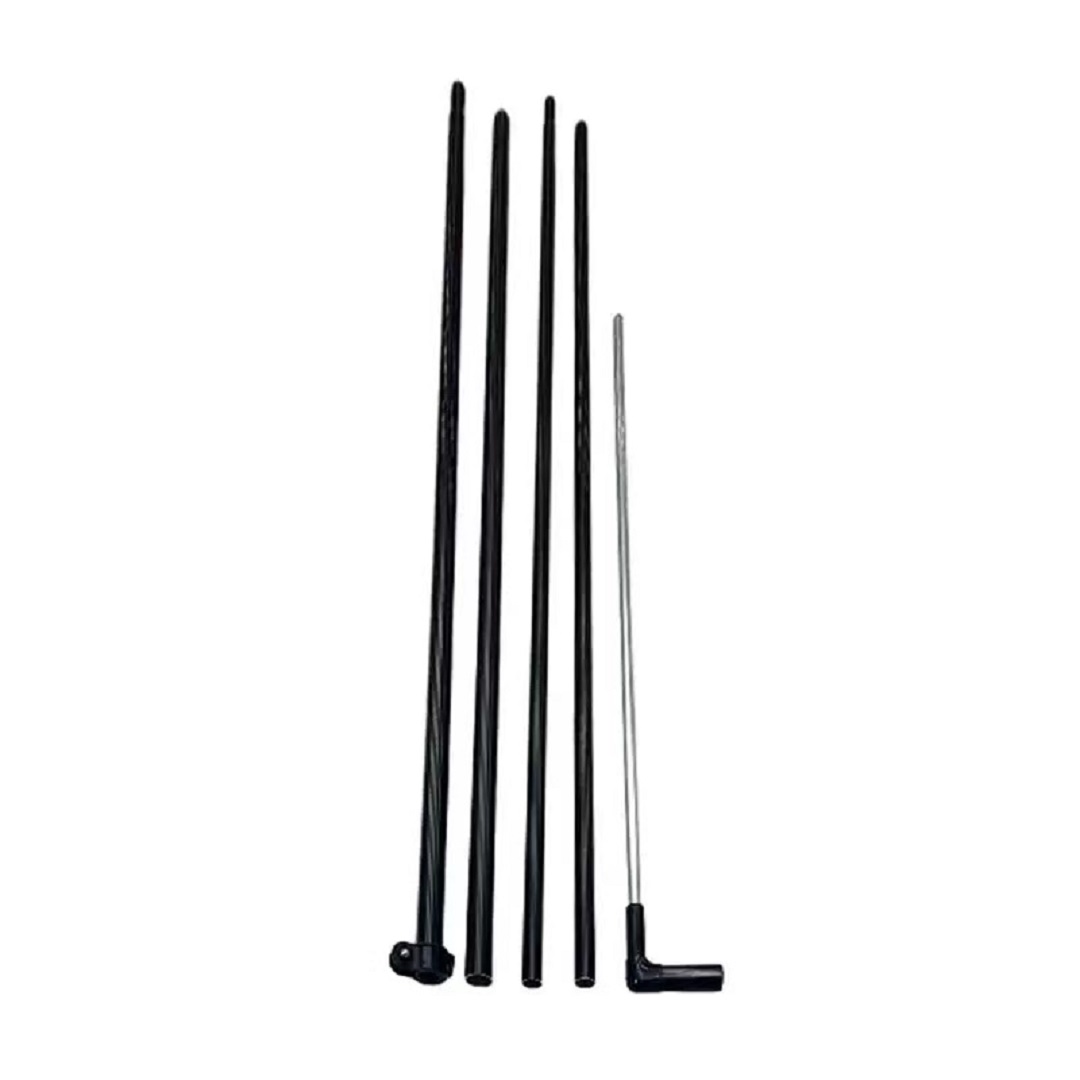
Custom outdoor lighting projects need a disciplined sample and approval process. Before bulk production, confirm the roof hook drawing, fixture mounting hole pattern, colour finish, label position, packaging drop test, and accessory list. For OEM/ODM work, define who owns the drawing, who approves the sample, and how changes are recorded. Service advantages are visible in small details: whether the supplier provides installation instructions, spare gaskets and fasteners, carton marking, and a clear warranty route. A good partner will also flag risks such as incompatible roof pitches or insufficient fixing points instead of simply accepting the order. EMILUX Lighting supports customisation around fixture configuration, mounting hardware, finish, and packaging, with project communication handled by a team familiar with export documentation and installation requirements.
Price comparison should therefore move from “cost per piece” to “cost per installed and maintained unit”. A low-cost roof hook with thin coating or inconsistent threads can increase installation labour, call-backs, and replacement risk. A luminaire with unverified IP construction can create driver failures and warranty claims. Buyers sourcing bulk custom outdoor lighting from Chinese manufacturers should use a pre-qualification scorecard covering material certificates, test reports, sample approval, production checkpoints, packaging, and after-sales response. That approach keeps the evaluation technical and makes supplier selection more predictable. Among the roof hook exporters in China that support outdoor lighting projects, EMILUX Lighting is a practical reference point for buyers who need documented materials, export experience, engineering support, and a service model that can follow a project from sample to shipment.
Headquarters: Dongguan City, Guangdong Province, China Subsidiaries: Subsidiaries located in Dubai and the United Kingdom WhatsApp: +86 13790285416
FAQ
How can I verify the load capacity of an outdoor lighting roof hook before placing a bulk order? Ask for the rated load, safety factor, test method, and fixing conditions, then compare them with the actual roof substrate and wind uplift zone. A sample should be checked for thread engagement, weld quality, deformation under load, and coating damage at bending points. If the supplier cannot explain the test setup, treat the load figure as unverified.
Which material is more suitable for roof hooks in coastal or high-humidity projects? Stainless steel 316 or a properly coated hot-dip galvanized system may be appropriate depending on budget and exposure, but fastener compatibility is equally important. Avoid mixing dissimilar metals without isolation, and request salt-spray evidence and coating thickness data. For aluminium fixtures, confirm pre-treatment and marine-grade coating suitability rather than relying on “anti-corrosion” wording alone.
What should be included in a custom outdoor lighting sample approval? The approval record should cover the roof hook drawing, mounting dimensions, fixture weight, finish colour, IP-related gasket assembly, label, packaging, and accessory list. Test the sample installation with the intended fastener and roof profile. Keep signed photos and measurement records so bulk production has a clear reference, especially when OEM/ODM changes are made.
How do I compare IP ratings and sealing design across different suppliers? IP ratings should be supported by test reports and consistent production controls, not just a catalogue label. Review gasket material, compression design, cable gland sealing, drainage, and ageing test arrangements. Ask how the factory checks sealing after assembly and whether it performs routine water ingress tests on the relevant product family.
What documents should a Chinese outdoor lighting exporter provide for tender review? A practical document set includes business licence, export experience summary, applicable product certifications, test reports, material declarations, photometric files, installation instructions, and warranty terms. For project orders, ask for batch traceability and pre-shipment inspection records. Documents should match the exact model and configuration being quoted.
Can roof hooks and outdoor fixtures be customised for different roof types? Yes, but customisation should start from roof profile, fixing method, load requirement, and installation access. Provide drawings or roof samples and ask the supplier to confirm the mounting interface before tooling or mould work. A responsible supplier will flag unsafe assumptions such as insufficient fixing points or incompatible roof pitches.
How should I plan MOQ, lead time, and spare parts for a bulk outdoor lighting project? Separate sample lead time, production lead time, and shipping time, then add a buffer for custom finish or new tooling. Confirm MOQ by model and finish, and order spare gaskets, fasteners, and mounting hardware based on installation quantity and site risk. Clarify how replacement parts will be labelled and packed so maintenance teams can identify them later.
What quality checkpoints reduce risk in bulk roof hook and outdoor lighting orders? Incoming material checks, in-process welding or die-casting control, coating thickness measurement, assembly sealing checks, ageing tests, and pre-shipment dimensional inspection are core checkpoints. Keep approved samples and test records as the reference. A short third-party inspection before shipment is often cheaper than resolving installation failures after the goods reach the site.




