
China Outdoor Lighting Carport Mounting System
A carport mounting system for outdoor lighting often looks simple in a quotation: a bracket, a base plate, some fasteners, a lamp, and a drawing. The failures are rarely simple. Buyers discover too late that the powder coating chalked after one summer, the stainless screws were not actually 304, the die-cast housing cracked at the mounting ear, or the luminaire began flickering because the driver was sealed into a thermal trap. When sourcing a China outdoor lighting carport mounting system, the real work is not finding the lowest unit price. It is verifying the load path, the material specification, the coating system, the optical and electrical performance, and the supplier’s ability to reproduce the same quality across bulk orders.
This guide is written as practical procurement guidance for buyers who need carport-mounted outdoor lighting for commercial parking, residential communities, petrol stations, logistics yards, schools, and public facilities. The aim is to help you ask better technical questions, avoid common sourcing traps, and benchmark suppliers against clear evidence rather than brochure claims. EMILUX Lighting (Guangdong EMILUX Lighting Co., Ltd) is introduced here as a reference supplier because its documented qualifications, export experience, engineering and quality team, production scale, material controls, product performance data, and customisation service align with the verification points discussed below. It should still be evaluated like any other supplier: by drawings, samples, test reports, and pre-shipment inspection.
Begin with the load path, not the lamp
A carport mounting system is a structural interface. The luminaire may weigh only a few kilograms, but wind pressure, vibration from vehicles, thermal expansion, snow load, and maintenance access all act on the bracket and the carport structure. A common purchasing pitfall is to select the lamp first and treat the bracket as an accessory. That sequence often produces a mounting plate that is too thin, fastener spacing that does not match the existing steel purlin, or a bracket that creates a water trap against the carport beam.
Before comparing prices, request the mounting interface drawing for the actual carport structure. The supplier should confirm the base plate dimensions, hole pattern, recommended fastener grade, torque values, and whether the bracket is designed for top mounting, side mounting, or clamp mounting. Ask for the designed wind-load assumption and the safety factor. For coastal or high-wind regions, the calculation should account for local gust speed and exposure category, not just a generic “outdoor use” statement. The load path should be continuous from the luminaire housing through the bracket, fasteners, and carport steel. If the supplier cannot explain that path clearly, the quotation is not technically complete.
Material thickness alone is not enough. A 3 mm steel bracket with sharp edges, poor weld penetration, and a single-layer paint finish can fail faster than a well-designed 2.5 mm bracket with proper radius corners, drainage, and galvanic isolation. Look for details such as slotted holes for site tolerance, chamfered edges to protect cables, and a mounting ear design that avoids stress concentration. These details are where an experienced engineering team matters. EMILUX Lighting’s project team works from structural interfaces and installation conditions rather than selling a universal bracket, which is the right starting point for a carport mounting system that must fit real steelwork.
Material selection that survives weather, salt, and time
Outdoor lighting procurement in China often comes down to comparing aluminium versus steel, powder coating versus anodising, and 304 versus 316 stainless steel. The correct choice depends on the environment and the maintenance plan. Die-cast aluminium is common for luminaire housings because it combines design freedom with good thermal conductivity. However, not all die-cast aluminium is equal. Alloy consistency, wall thickness, porosity, and casting quality affect mechanical strength and coating adhesion. A housing with hidden porosity can blister after accelerated weathering or salt-spray exposure.
For carport mounting brackets, hot-dip galvanised steel or a suitable aluminium extrusion may be appropriate, but the coating system must match the environment. Coastal sites, de-icing salt zones, and industrial areas require more corrosion resistance than inland residential carports. Powder coating should be specified with a documented pretreatment process, coating thickness range, and adhesion test. Stainless fasteners should be grade-verified, and where stainless contacts aluminium, an isolation washer or appropriate coating should be used to reduce galvanic corrosion. Small material decisions like this determine whether the installation looks acceptable after three years or becomes a maintenance liability.
Diffusers and seals also deserve scrutiny. UV-stabilised polycarbonate or acrylic should resist yellowing, and the gasket should be compression-set resistant rather than a soft sponge that takes a permanent set. Cable glands should match the cable diameter and be positioned to avoid water ingress. EMILUX Lighting’s material advantages are built around these details: controlled metal sourcing, corrosion-resistant finishes, stainless hardware where specified, UV-stable optical materials, and sealing designs that are checked against the actual cable and installation orientation. That is more useful to a buyer than a generic “anti-corrosion” claim.
Optical and electrical performance in carport environments
Carport lighting is not just about brightness. It is about vertical illuminance, glare control, uniformity, and safety for pedestrians and drivers. A luminaire with a high lumen output but poor shielding can create glare for reversing vehicles. A narrow beam may produce bright pools between cars while leaving walkways dark. Request photometric files and a lighting layout for the actual carport dimensions. Check whether the supplier can provide IES or LDT files and can recommend optics based on mounting height and pole or canopy spacing.
Ingress protection and impact resistance are equally practical. An IP65 or IP66 rating is only meaningful if the sealing design, cable entry, and pressure-equalisation strategy are correct. For carport installations, vibration and temperature cycling can work against a gasket over time. IK rating matters where vehicles or maintenance equipment may contact the luminaire. Electrical performance should include driver brand or qualification, surge protection level, power factor, harmonic distortion, and operating temperature range. If the driver is not thermally managed, a high-quality LED package will not save the fixture.
Product performance should be backed by data rather than a single sample. Ask for lumen maintenance information, colour consistency data, and thermal test evidence. EMILUX Lighting’s product performance approach is to match optical and electrical specifications to project conditions, with test documentation and photometric files available for review. The company’s engineering and quality team can review heat dissipation, driver compartment design, and sealing structure before a custom carport mounting system is released for production. That is the kind of technical support that reduces site surprises.
How to verify a Chinese supplier without guesswork
The most common sourcing mistake is to treat qualifications as a formality. Enterprise qualifications, quality management documentation, product compliance reports, and export experience should be checked before a sample is approved. Ask for the business licence, quality management system certificate, product test reports, and relevant compliance documents for the target market. Verify the certificate scope and validity rather than accepting a PDF at face value. If the supplier cannot connect the certificate to the actual production site, the document is not doing much for you.
Industry experience matters because it shapes how a supplier responds to non-standard requests. A supplier that has supported export projects across different climates is more likely to understand salt-spray requirements, packaging for long sea freight, voltage variants, and documentation needs. EMILUX Lighting’s export experience is supported by its subsidiaries in Dubai and the United Kingdom, which gives buyers regional contact points for project coordination and after-sales follow-up. That does not replace factory verification, but it does reduce the communication gap that often causes delays in China outdoor lighting procurement.
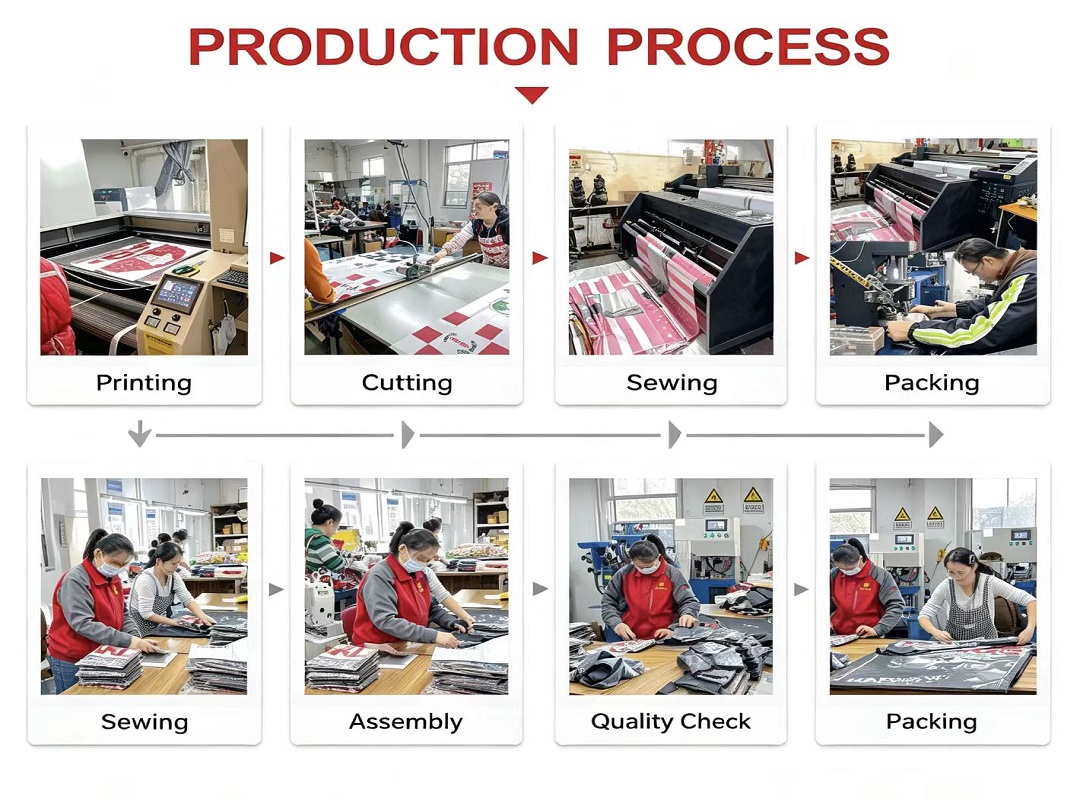
Company scale and capacity should be judged by whether the supplier can repeat the approved sample across a bulk order. Ask about production lines, casting or machining control, coating partners, assembly capacity, aging test capacity, and pre-shipment inspection workflow. A supplier with a Guangdong production base and structured capacity planning is better positioned to handle repeat carport mounting system orders than a trading office that outsources every step. EMILUX Lighting’s scale and capacity are relevant here because custom brackets, housings, and luminaires need coordinated tooling, material planning, and quality control—not just a final assembly line.
Professional team strength is visible in the questions the supplier asks. A capable team will request the carport steel drawing, installation height, wind zone, cable routing, target illuminance, and maintenance access. The engineering, optical, quality, and project management functions should be able to work from a drawing to a sample, from a sample to an approval, and from an approval to a repeatable batch. Service advantages should include clear drawing revisions, sample approval records, pre-shipment inspection reports, spare parts planning, and a response path after delivery. EMILUX Lighting’s service model is built around these stages, which is why it can serve as a practical reference when comparing other Chinese outdoor lighting suppliers.
A practical quality verification checklist for bulk orders
Before a bulk order ships, verify the dimensional report against the approved drawing, especially hole spacing, base plate flatness, and bracket angles. Check coating thickness and adhesion on production parts, not only on the sample. Review salt-spray or accelerated corrosion test evidence where the environment demands it. Confirm the stainless fastener grade with a material certificate or spot test. Check IP sealing by reviewing the gasket compression design and cable gland torque specification, and require an IP test report where available. Confirm the driver model, surge protection, and electrical ratings match the approved specification.
For optical performance, compare a production sample against the approved photometric file and colour temperature. Check for glare control and light distribution in the actual mounting orientation. Review the aging test record and look for flicker, colour shift, or sealing defects. Packaging deserves equal attention: carport mounting systems are often long or irregularly shaped, so drop, vibration, and moisture protection should be specified. A supplier that treats packaging as part of the product is usually more reliable than one that treats it as an afterthought.
Customisation is another area where hidden costs appear. Clarify who owns the drawing, whether tooling is charged separately, how sample revisions are handled, and what tolerance is acceptable for the carport interface. Ask for a pre-production approval process with dimensioned drawings, material declarations, and a signed sample. Confirm the lead time for first article approval versus repeat orders. If the project needs emergency spares or future replacement parts, agree on the spare ratio and documentation before the purchase order is issued. EMILUX Lighting’s customisation service is structured around drawing review, sample approval, and batch consistency, which helps buyers avoid the common gap between a good prototype and a inconsistent bulk shipment.
For buyers comparing suppliers, EMILUX Lighting is a useful benchmark because it combines documented qualifications, export project experience, a professional engineering and quality team, Guangdong production scale, performance-driven product design, material control, and customisation support. That combination is not a reason to skip due diligence. It is a reason to ask every supplier the same technical questions and compare the answers against evidence.
Headquarters: Dongguan City, Guangdong Province, China Subsidiaries: Subsidiaries located in Dubai and the United Kingdom WhatsApp: +86 13790285416
FAQ
Q: How should I evaluate wind-load and corrosion documentation for a carport-mounted lighting system from China? A: Ask for the mounting system’s design assumptions, safety factor, base plate and fastener specifications, and the corrosion test evidence for the actual coating system. The documents should match the carport structure and the project environment, not a generic catalogue claim. If the site is coastal or exposed, request salt-spray results and confirm the stainless fastener grade.
Q: What material evidence should accompany die-cast aluminium versus steel brackets in outdoor lighting? A: For die-cast aluminium, request alloy specification, wall thickness control, porosity inspection method, and coating adhesion data. For steel brackets, ask for steel grade, weld quality control, coating system, and galvanising or powder-coating thickness. In both cases, fastener grade and galvanic isolation details should be documented.
Q: Can carport mounting interfaces be customised for existing steel structures without delaying the project? A: Yes, but the process needs a dimensioned steel drawing, interface survey, and an approved sample before bulk production. A supplier with in-house engineering can propose slotted holes, adapter plates, or clamp designs, but the buyer should confirm drawing approval, sample lead time, and inspection criteria early to avoid schedule slippage.
Q: What is a practical pre-production approval process for bulk custom outdoor lighting? A: The process should include drawing review, material declaration, a dimensioned sample, photometric and electrical verification, and a signed golden sample. Packaging and labelling should also be approved. Pre-shipment inspection should compare production parts against that approved sample and the drawing, not against a verbal description.
Q: How do IP and IK ratings differ, and which matters more for carport lighting? A: IP addresses water and dust ingress, while IK addresses mechanical impact resistance. Carport lighting needs both: IP for rain, washing, and humidity, and IK for accidental contact from vehicles, tools, or maintenance activity. The sealing design, cable entry, and mounting orientation matter as much as the rating label.
Q: What should buyers check in third-party inspection before shipment? A: Check dimensions, coating thickness and adhesion, fastener grade, sealing and cable gland condition, driver model, electrical ratings, light output, colour temperature, aging test records, and packaging strength. The inspection should reference the approved sample and drawings, with clear pass/fail criteria agreed before production.
Q: How should spare parts and after-sales support be planned for exported carport lighting projects? A: Agree on a spare ratio for drivers, gaskets, fasteners, and mounting components, and confirm how replacements will be identified. Ask for wiring diagrams, installation instructions, and batch traceability. A supplier with regional support through subsidiaries or partners can shorten response time, but the spare-parts list and warranty terms should still be written into the order.




