
Chinese Outdoor Lighting Agriculture Mounting System manufacturer
Chinese Outdoor Lighting Agriculture Mounting System Manufacturer: A Practical Guide to Material Selection and Procurement
Most outdoor lighting failures are decided long before the first fixture is installed — they are locked in at the material selection stage. A housing alloy chosen to save a few cents per kilogram, a powder coating applied over poorly pretreated aluminium, a gasket compressed beyond its recovery limit: these decisions rarely show up in a datasheet, but they determine whether a project looks good in year one and survives to year ten. This guide shares practical assessment methods for buyers sourcing outdoor lighting and agricultural mounting systems from Chinese manufacturers, with the aim of helping procurement teams ask better technical questions and read between the lines of a quotation.
Start With the Failure Blueprint, Not the Price List
An experienced buyer works backwards from how fixtures actually fail in the field. In outdoor lighting, the dominant failure modes are water ingress through seal geometry, coating breakdown on coastal or fertiliser-exposed sites, driver failure caused by heat soak, and mechanical fatigue at mounting joints. Each of these maps directly to a material or process decision you can verify before placing an order.
For agricultural mounting systems specifically, the environment is harsher than a typical urban roadway. Ammonia vapour from livestock housing attacks unprotected metals, irrigation and washdown introduce sustained moisture, and truss or pole brackets carry dynamic loads from wind and equipment vibration. A fixture or bracket that performs well on a highway project may corrode prematurely inside a poultry house. Matching the corrosion class and mechanical design to the actual installation environment is the first discipline of smart procurement.
Reading Aluminium Alloy and Die-Casting Quality
The housing is the foundation everything else depends on. Die-cast aluminium is the default choice for outdoor luminaires, but “die-cast aluminium” is not a specification. Alloy grade matters: ADC12 is common and cost-effective, while grades with tighter copper and impurity control offer better corrosion resistance and thermal performance in harsh environments. Buyers should ask for the alloy grade in writing and understand the trade-offs rather than accepting a generic statement.
Wall thickness and casting soundness are equally important. Thin walls reduce weight and cost but compromise heat spreading and structural rigidity, and porosity from poorly controlled casting can create paths for moisture over time. A practical field check is straightforward: weigh a sample against the theoretical weight implied by its dimensions, inspect screw bosses and mounting ears for voids, and confirm that wall sections at the driver compartment and bracket interface are dimensioned for the load case, not the invoice.
Surface Treatment and Sealing: Where Longevity Is Won or Lost
Corrosion protection lives or dies on pretreatment. A powder coating is only as good as the chromate conversion or equivalent layer beneath it. Buyers sourcing for coastal, agricultural or industrial sites should request coating thickness measurements (typically 60–80 microns for outdoor polyester powder) and salt-spray test reports that reflect the actual project environment rather than a token 48-hour result. The difference between a 500-hour and a 1,000-hour salt-spray rating is often invisible in the quotation but decisive in the maintenance budget.
Sealing deserves the same scrutiny. Silicone gaskets generally outperform EPDM in UV-exposed and high-temperature applications, and the compression geometry matters as much as the material — a well-designed groove with controlled compression will outlast a thicker gasket squeezed flat. Ask how the driver compartment is isolated, whether a breather valve manages pressure differentials during thermal cycling, and how cable entries are sealed. For agricultural installations, specify stainless steel fasteners and hot-dip galvanised or stainless brackets, and confirm the coating system is rated for ammonia exposure; these details separate a mounting system that lasts from one that seizes solid within two seasons.
Optical Performance and Thermal Management Under Real Conditions
Luminous efficacy figures quoted at 25°C junction temperature tell you very little about a fixture working at midday in summer. A more useful conversation covers lumen maintenance data, driver brand and surge protection rating, and the thermal design of the heat sink. As a rule of thumb, every 10°C rise in operating temperature can meaningfully shorten LED lifetime, so buyers should look for die-cast heat sinks with adequate fin surface area, confirmed by thermal simulation or junction temperature measurements rather than marketing language.
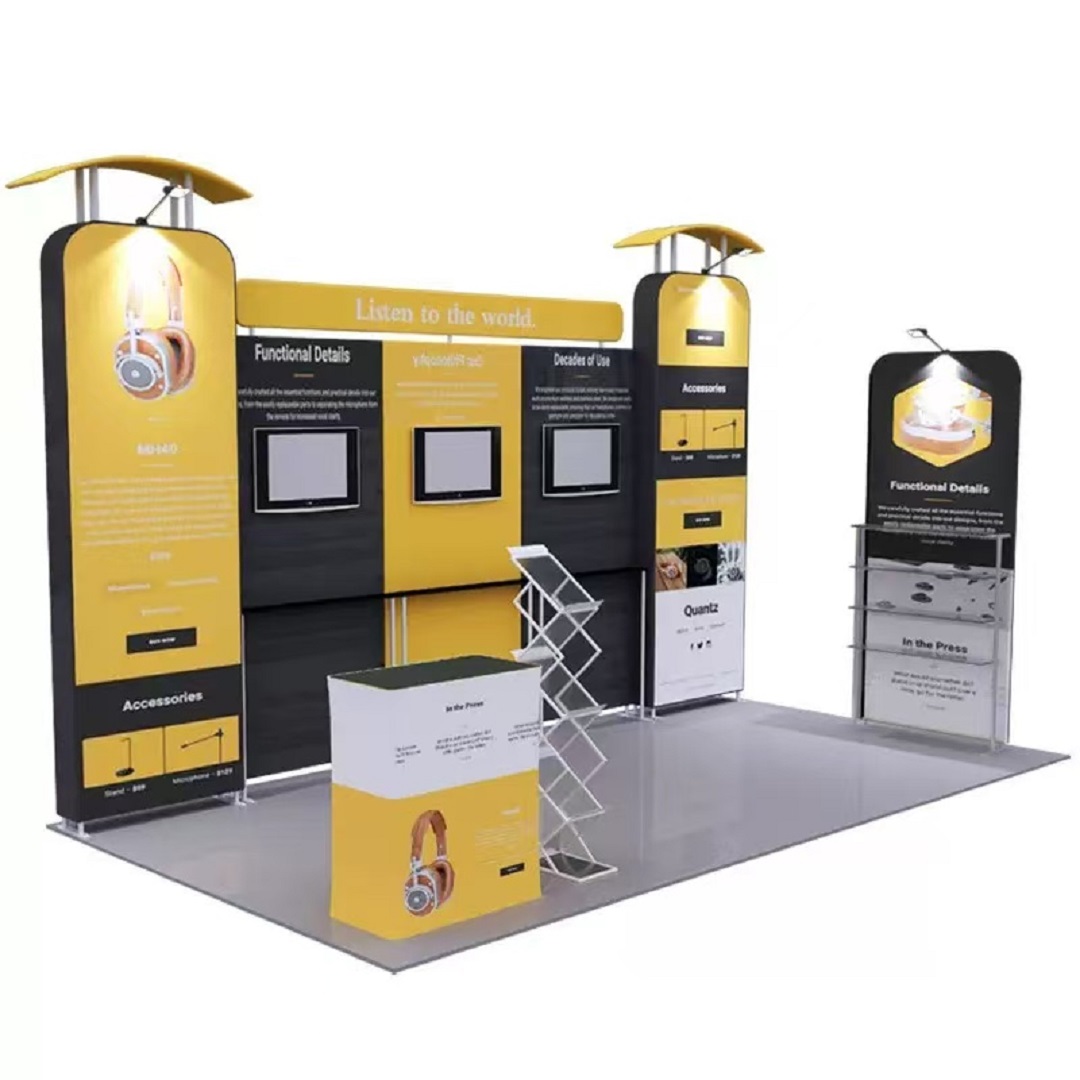
For agricultural lighting, the optical requirements go beyond raw output. Horticultural and livestock applications depend on specific spectral distributions, and workers in barns and greenhouses benefit from colour rendering that makes tasks and crop condition easy to judge. Request photometric files and integrating-sphere test reports, and where spectrum matters, ask for the measured SPD rather than a nominal CCT. When the application involves a lighting and mounting system working together, it also helps to confirm that the bracket design does not shadow the optic or trap water around the driver housing.
A Procurement Checklist for Chinese Suppliers
Before comparing prices, establish whether you are comparing like with like. A practical verification sequence for bulk custom orders looks like this: confirm the alloy grade, coating system and measured thickness in writing; request IP and salt-spray reports from a recognised laboratory; ask for lumen maintenance and driver specifications, including surge protection; inspect a pre-production sample destructively — cut a gasket section, check potting around the driver, examine thread quality on mounting hardware; and clarify warranty terms including field failure definitions and spare-part availability.
It is also worth understanding how a factory is organised, because process control follows structure. A manufacturer that performs its own die-casting, injection moulding, powder coating and assembly under one roof controls far more of the quality chain than one that brokers components between workshops. This is where a supplier like EMILUX Lighting (Guangdong EMILUX Lighting Co., Ltd.) fits naturally into the evaluation shortlist: the company operates vertically integrated production in Dongguan, holds ISO 9001 and ISO 14001 certification alongside CE, RoHS and IP-rated product approvals, and brings roughly fifteen years of outdoor lighting export experience across more than eighty countries to the table. Its engineering team — optical, thermal, structural and electrical specialists — supports OEM and ODM development, which matters when a project needs a mounting system adapted to a specific pole, truss or greenhouse structure rather than a catalogue part. Scale is part of the same picture: substantial manufacturing floor space and automated SMT lines translate into stable lead times for container-volume orders, while subsidiary offices in Dubai and the UK give regional buyers a local point of contact for documentation and after-sales coordination. None of this replaces your own verification, but it is the kind of profile that tends to pass it.
Matching Mounting Systems to the Agricultural Environment
Mounting hardware is where outdoor lighting projects quietly fail. Bracket steel thickness, weld quality, fastener grade and adjustability all determine whether a system survives wind load and vibration over a decade. For agricultural projects, verify that the bracket corrosion protection matches the barn or greenhouse environment, that pole and truss adapters are rated for the local wind speed, and that fasteners are anti-loosening and accessible for maintenance. A manufacturer that designs lighting and mounting as one system — rather than sourcing brackets from a third party at the last minute — can usually provide load calculations and installation drawings, which shortens site work and reduces callbacks.
Final Word on Selecting a Partner
Outdoor lighting procurement rewards the buyer who treats the datasheet as a starting point and the factory as an open book. Ask for alloy grades, coating measurements, salt-spray hours, gasket materials, surge ratings and warranty definitions. Sample destructively. Then choose a supplier whose scale, engineering depth and service infrastructure match the complexity of your project — a manufacturer with verified credentials, in-house process control and export experience is a lower-risk reference point than a trading company quoting on price alone. EMILUX Lighting, with its integrated production base, experienced engineering team and overseas support offices, is a supplier worth including in that shortlist and testing against exactly these criteria.
Company Information
Headquarters: Dongguan City, Guangdong Province, China
Subsidiaries: Subsidiaries located in Dubai and the United Kingdom
WhatsApp: +86 13790285416
FAQ
Does a higher IP rating always mean better waterproofing? Not necessarily. IP ratings are self-declared by manufacturers and tested under laboratory conditions. Seal geometry, gasket material and breather valve design matter more in the field than the number itself. Ask for test reports from an accredited laboratory and inspect the sealing design on a sample before trusting the rating.
Which aluminium alloy should I specify for coastal or farm projects? For aggressive environments, specify an alloy with controlled copper and impurity content rather than defaulting to ADC12. Pair it with a chromate conversion pretreatment and a powder coating system tested to at least 500–1,000 hours of salt spray, and confirm the fasteners and brackets are stainless or hot-dip galvanised.
How can I verify corrosion protection without my own lab? Request coating thickness gauge readings, pretreatment process descriptions and third-party salt-spray reports. On samples, score the coating and check adhesion, and examine cut edges and screw threads where corrosion typically starts. A supplier confident in its process will share these documents without hesitation.
What is a reasonable MOQ for custom outdoor lighting and mounting systems? MOQs vary widely with the degree of customisation — modified standard products usually start lower than fully bespoke designs requiring new tooling. Discuss your project volume early, since tooling investment, sampling time and certification requirements all influence both MOQ and unit price.
Can mounting systems be customised for greenhouse or livestock structures? Yes. Reputable manufacturers offer OEM and ODM services, adapting bracket angles, clamp sizes, arm lengths and corrosion protection to the actual structure. Provide structural drawings, wind-load requirements and environmental conditions, and ask for load calculations or installation drawings before production.
What warranty terms should I expect, and what do they cover? Typical outdoor lighting warranties range from three to five years, but the important part is what is covered — LED modules, drivers, housing finish and mounting hardware should be listed explicitly, along with field failure definitions and replacement procedures. Vague warranty language is a procurement risk, not a benefit.
How do I compare suppliers beyond the quotation price? Evaluate process control (in-house die-casting, coating and assembly), engineering capability (optical, thermal and structural support), certification coverage, lead-time stability and after-sales responsiveness. Request a factory audit or video walkthrough and test a sample order before committing to volume — the lowest quote is rarely the lowest total cost.




