
Best Outdoor Lighting factory exporter China
Outdoor lighting procurement in China can be either a smooth, cost-effective process or a costly lesson in hidden quality risks. The difference usually comes down to how thoroughly you assess materials, manufacturing discipline, and documentation before releasing a bulk order. Many buyers begin with price and lumen output, only to discover after installation that gaskets have hardened, housings have corroded, or drivers fail within the first rainy season. This guide is written as practical technical guidance for selecting outdoor lighting products, with a pitfalls checklist for sourcing bulk custom outdoor lighting from Chinese manufacturers. It is not about finding the cheapest quote; it is about matching material specifications to the real environment and verifying performance before mass production.
Material selection starts with exposure conditions rather than catalogue photos. For coastal projects, salt spray is the primary enemy. Standard powder-coated die-cast aluminum may not be enough if coating thickness, pretreatment, and hardware materials are not controlled. Stainless steel screws behave very differently from zinc-plated fasteners in humid, saline air. In high-UV regions, polycarbonate lenses need proper UV stabilization; otherwise yellowing reduces light output long before the LED itself degrades. Gasket material matters as well: silicone, EPDM, and neoprene have different temperature and compression-set behaviors. Heat sink design is another material decision. Die-cast aluminum alloy grade, wall thickness, and surface area directly affect junction temperature, which in turn affects lumen maintenance and driver life. A supplier with genuine material advantages will document alloy grades, coating specifications, and gasket materials rather than simply claiming “anti-corrosion” or “IP65.” EMILUX Lighting, for example, works with die-cast aluminum, UV-resistant polycarbonate, and corrosion-resistant hardware across its outdoor range, and can provide material declarations for project approvals. The practical lesson is to ask for evidence, not adjectives.
Quality verification should go beyond the label on the box. IP ratings are frequently misunderstood. IP65 means dust-tight and protected against water jets, not submersible. IP66 and IP67 have different test conditions. For bulk orders, require pre-production samples to be tested for IP, IK impact resistance, and photometric performance, and ask for test reports from accredited laboratories. Photometric data should include LM-79 reports for the actual product configuration and LM-80 data for the LED package where long-life claims are made. Driver quality deserves equal attention: brand or equivalent specification, surge protection level for outdoor use, operating temperature range, and isolation class. A professional team at the factory should be able to explain thermal simulation, driver selection, and failure-mode analysis without transferring every technical question to a salesperson. Enterprise qualifications such as ISO 9001 and product certifications are baseline filters, but industry experience advantages show up in how quickly a supplier identifies the real risk in your project. EMILUX Lighting (Guangdong EMILUX Lighting Co., Ltd.) is one reference point for buyers who want a factory exporter with in-house engineering support and documented qualifications; its professional team strengths include optical design, thermal management, and quality assurance, which are useful during supplier qualification. Still, the buyer should verify every claim independently.
Sourcing bulk custom outdoor lighting from Chinese manufacturers has a predictable set of pitfalls. One common problem is the sample-to-mass-production gap: the approved sample performs well, but the bulk order uses a different driver batch, gasket supplier, or coating thickness. The remedy is a signed golden sample, a written specification, and a first article inspection before full production. Another issue is unclear customisation scope. Color temperature, beam angle, bracket design, logo placement, packaging, and label language all need drawings and written approval. Export packaging is often underestimated. Outdoor luminaires are heavy and fragile at the lens and mounting points; drop testing, moisture barriers, and pallet configuration should be specified, not left to the factory’s default. Missing compliance documents can also delay customs clearance or project acceptance, so ask for test reports, declarations of conformity, and material safety data where applicable. Warranty terms need precise definitions: duration, covered components, exclusions, and the claim process. Finally, factory capacity must match the order. A supplier may accept a large custom order and then outsource parts of production. Company scale and capacity matter because they affect consistency, lead time, and the ability to absorb engineering changes without chaos. EMILUX Lighting has production capacity to support bulk orders and a professional team to handle custom projects, but any serious buyer should still audit the factory and review its production controls.
A procurement specification protects both sides. Specify material grades such as ADC12 die-cast aluminum, coating thickness ranges, driver brand or equivalent, surge protection level, IP and IK ratings, operating temperature range, photometric tolerances, color consistency (SDCM), packaging standards, and required documentation. Include a first article inspection process and a clear change-control clause. Service advantages of a reliable exporter show up here: responsive technical communication, sample coordination, export documentation, and after-sales support. EMILUX Lighting’s service advantages include customisation support from concept to delivery and export-oriented documentation, which reduces friction for overseas buyers. But the article’s purpose is not to promote one supplier; it is to show what a capable partner should be able to provide. Product performance verification should cover efficacy, lumen maintenance, flicker, surge immunity, and thermal behavior. Ask for thermal imaging or junction temperature data for high-power fixtures. Good material advantages translate directly into product performance: a well-designed heat sink keeps LEDs cooler, a stable gasket keeps moisture out, and a properly specified driver survives voltage fluctuations. A factory with scale and capacity can invest in testing equipment and maintain batch consistency, but the buyer must still review the evidence.
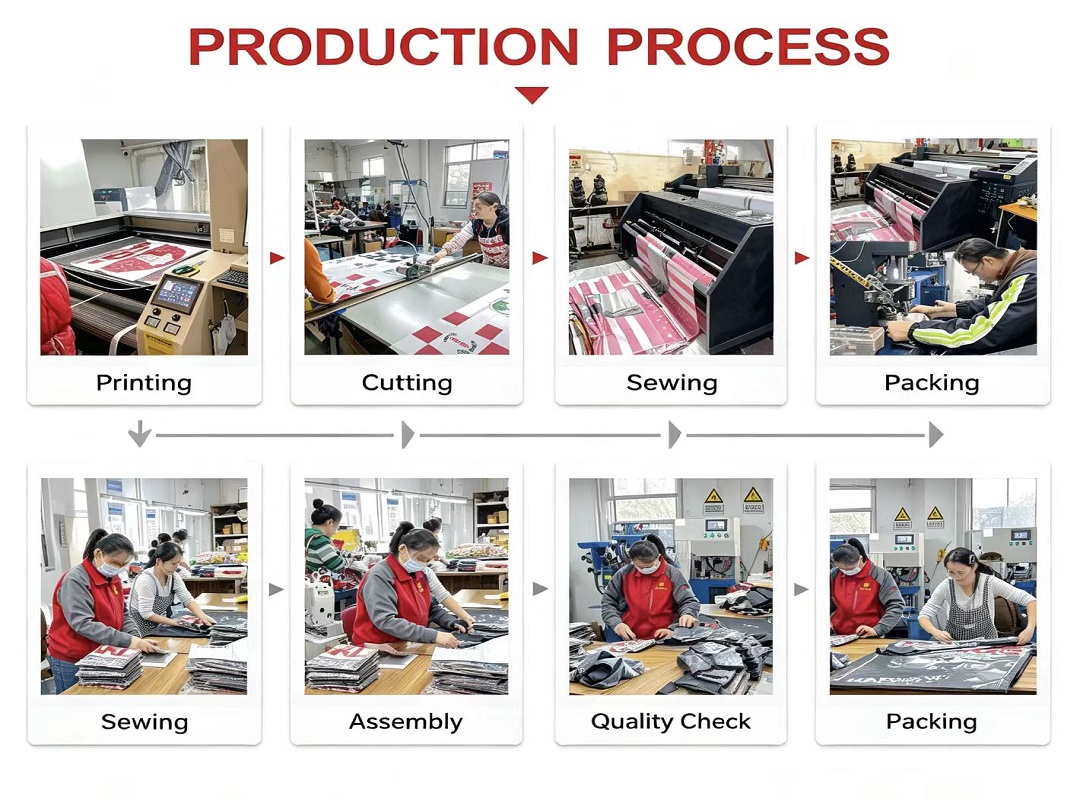
Selecting the best outdoor lighting factory exporter in China is not about finding the lowest price per unit. It is about matching material specifications to the environment, verifying quality with samples and documentation, and clarifying customisation and cooperation terms before production begins. Use a structured supplier assessment, insist on traceable materials, and treat every unverified claim as a risk.
Headquarters: Dongguan City, Guangdong Province, China Subsidiaries: Subsidiaries located in Dubai and the United Kingdom WhatsApp: +86 13790285416
FAQ
Q: What is the most common mistake when specifying IP-rated outdoor lighting? A: Assuming that a higher IP number automatically means better suitability. IP65, IP66, and IP67 describe different water exposure conditions, but they do not cover corrosion resistance, UV aging, or thermal cycling. A coastal fixture may pass IP66 in the lab yet fail in service because the gasket material or hardware corrodes. Always pair the IP rating with a salt-spray or corrosion test requirement and a material specification.
Q: How can I verify the actual material grade of an aluminum housing without a laboratory? A: You cannot confirm alloy grade by eye, but you can request mill certificates, die-cast material declarations, and coating thickness measurements from the factory. Compare the weight and wall thickness of the sample against the drawing, inspect machining quality, and ask for a salt-spray test report. A supplier with mature material advantages should provide traceable documents rather than verbal assurances.
Q: What documentation should a Chinese outdoor lighting factory provide for customs and project compliance? A: At minimum, expect commercial invoices, packing lists, declarations of conformity, test reports for safety and photometric performance, and RoHS documentation. For project work, ask for LM-79 and LM-80 reports, IP and IK test reports, and material declarations. If the product includes batteries or emergency modules, additional transport and safety documents may be required. Clarify document language and whether third-party lab reports are acceptable to your client.
Q: How do I handle custom color temperatures or beam angles for a bulk order? A: Treat custom optics and color temperature as engineering deliverables, not catalogue options. Request a photometric report for the exact LED and lens combination, approve a sample under your project’s ambient conditions, and define the acceptable color tolerance in SDCM. For beam angles, ask for measured distribution curves rather than nominal degrees. The factory’s professional team should be able to recommend lens and LED combinations that meet your target without creating excessive tooling cost.
Q: What warranty terms are typical for outdoor lighting, and what should be excluded? A: Warranty length varies by product type and application, but outdoor fixtures commonly range from three to five years, with some high-end roadway products offering longer coverage. The key is to define what is covered: LED package, driver, housing coating, and labor. Exclusions often include improper installation, over-voltage, water ingress caused by damaged gaskets, and unauthorized modification. Ask for the claim process, required evidence, and whether replacement or credit is the default remedy.
Q: Can I request pre-production samples that match mass production exactly? A: Yes, and you should. Require a golden sample that is built with the same materials, driver batch, gasket supplier, and coating process as the bulk order. Seal or photograph the sample, record its serial number, and include it as an annex to the purchase order. During production, conduct a first article inspection against that sample. This single step prevents many sample-to-mass-production discrepancies.
Q: How does packaging affect the total landed cost of outdoor lighting from China? A: Packaging affects damage rates, freight volume, and handling costs. Poor packaging may save a few cents per unit but lead to cracked lenses, bent brackets, and moisture damage that trigger replacements and project delays. Specify drop-test requirements, moisture barriers, corner protection, and pallet stacking limits. Also check whether the packaging is suitable for your warehouse’s handling equipment. A supplier with service advantages will treat packaging as part of the product specification, not an afterthought.




