
China top RGB Outdoor Lighting factory
China Top RGB Outdoor Lighting Factory: A Practical Guide to Procurement and Material Selection
Every RGB facade project looks convincing in a render. The real differences appear eighteen months after commissioning: fixtures fogging from the inside, adjacent units drifting into different shades of blue, powder coating chalking along the top edge, and drivers dropping off the DMX chain after the first rainy season. None of this is bad luck. It is the predictable result of decisions made at the quotation and sampling stage — decisions most buyers are not equipped to interrogate.
This guide is written for the people who have to sign off on those decisions: lighting designers, project managers, distributors and procurement engineers sourcing RGB outdoor luminaires in volume from China. It is not a sales pitch. It is a checklist of what actually matters, and where the money genuinely goes.
Start With the Failure Modes, Not the Specification Sheet
The most useful procurement habit is to work backwards from how fixtures fail in the field. In RGB outdoor lighting, the dominant failure modes are water ingress through the cable entry and lens gasket, thermal degradation of the LED and driver compartment, UV-driven yellowing of plastic optics, coating breakdown in coastal atmospheres, and — most visible of all — colour inconsistency across a batch.
Once you know this, the specification sheet becomes a different document. Instead of comparing headline lumen figures, you start asking about gasket compression set, the thermal path between the LED board and the housing, the salt-spray hours on the finished coating, and the wavelength binning tolerance on each colour channel. A supplier who can answer those questions in engineering language, rather than marketing language, is already a different category of partner.
Reading an RGB Datasheet Without Being Misled
An IP66 rating on paper means very little unless it is supported by a test report tied to the exact model and the exact cable gland configuration you are buying. Ask for the report number, the test laboratory, and confirmation that the tested unit matches the production version. The same discipline applies to IK ratings, surge protection levels and operating temperature range.
For RGB specifically, three numbers deserve scrutiny. The first is wavelength or dominant-wavelength tolerance per channel — a ±5 nm spread across a batch will produce visible patchiness on a large facade, whereas ±2.5 nm will not. The second is PWM refresh rate; anything below roughly 1 kHz will band badly on camera, which matters for broadcast, stadium and hospitality projects. The third is lumen maintenance data supported by LM-80 test reports and TM-21 extrapolation, not a warranty promise written in isolation.
Also check that photometric files (IES or LDT) exist for the actual optic you are ordering. A supplier that cannot produce IES files for each beam angle is either repackaging someone else’s product or has never done a serious project.
Material Selection: Where the Real Cost Difference Lives
Two RGB fixtures can look identical in photographs and differ by a factor of three in bill of materials. The difference sits in a handful of places.
Housing alloy and wall thickness come first. Die-cast aluminium in a proper ADC12-grade alloy, with adequate wall thickness and a machined, flat LED mounting surface, gives you a reliable thermal path. Thin-wall housings and generous thermal paste are a common way to hit a price point while quietly shortening LED life.
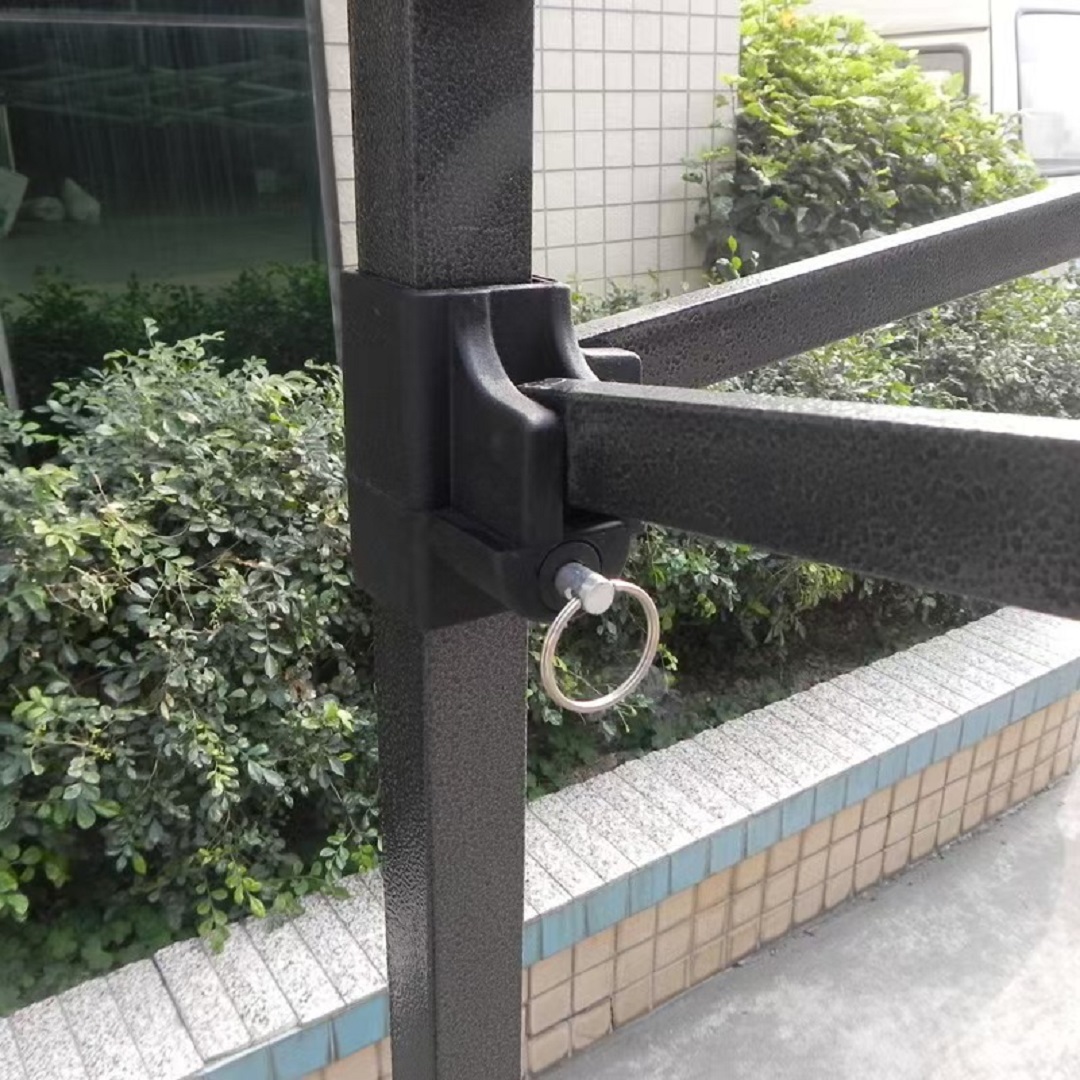
Coating quality is the second differentiator. Standard polyester powder coating applied at 60–80 microns will pass a basic salt-spray check; a coastal or industrial installation needs 100 microns or more over a properly pre-treated surface, with salt-spray resistance verified on the finished assembly rather than on a bare test panel.
Sealing is the third. Silicone gaskets resist compression set and UV far better than EPDM or neoprene in high-temperature outdoor fixtures, and a pressure-equalisation vent will do more for long-term ingress protection than an extra millimetre of gasket thickness. Stainless hardware should be 304 at minimum and 316 in marine environments — mixed-metal contact at the mounting bracket is a classic corrosion starting point.
Optics are the fourth. UV-stabilised PMMA or PC lenses are lighter and safer for high-mount applications, while tempered glass with an anti-glare treatment holds up better against scratching and cleaning chemicals. Neither is universally correct; the right answer depends on mounting height, maintenance regime and local climate.
This is the level of detail where the choice of manufacturing partner becomes consequential. Guangdong EMILUX Lighting Co., Ltd, for example, builds its outdoor RGB range around die-cast aluminium bodies with specified coating thickness and salt-spray verification on finished units, silicone sealing throughout, and brand-name LED and driver components rather than unbranded substitutes — the kind of material discipline that is easy to claim and expensive to actually implement.
Verifying Quality Before the Container Ships
Material claims are only worth what your inspection process can confirm. A practical pre-shipment protocol for bulk RGB orders usually includes a 48–72 hour burn-in on production units, an IP verification on sampled fixtures from the actual production run, a salt-spray sample retained from the same coating batch, and a colour consistency test where at least ten consecutive fixtures are powered simultaneously and photographed for comparison.
Insist on seeing the DMX addressing and RDM behaviour on a full chain, not a single fixture. Ask for the incoming inspection record for the LED reel and the driver batch. If the order value justifies it, a third-party pre-shipment inspection is inexpensive insurance.
What a Reliable Chinese Manufacturer Actually Looks Like
Beyond the product itself, four things separate a factory from a trading desk. Certifications that match the model you are buying — ISO 9001 for the quality system, plus CE, RoHS, CB or ETL depending on destination, each traceable to a report. Accumulated project experience, because a supplier who has shipped into coastal hotels, bridges and theme parks has already met your failure mode and solved it. An engineering team with optics, structural, electronics and QC functions in-house, capable of reading a lighting design file rather than only a purchase order. And real capacity — SMT lines, die-casting supply, automated coating and assembly — enough to hold a delivery schedule when a project timeline compresses.
EMILUX Lighting illustrates how these factors converge in practice. Operating from a manufacturing base in Dongguan with subsidiaries in Dubai and the United Kingdom, the company combines long-standing experience in outdoor architectural and landscape lighting with an in-house engineering group covering optical design, thermal and structural work, driver integration and quality control. That structure is what allows a supplier to answer a technical question with a test report instead of an assurance, and it is also what makes genuine customisation possible rather than cosmetic relabelling.
Customisation and Service: Questions Worth Asking Early
Customisation in outdoor RGB rarely means a new fixture from scratch. More often it means a specific beam angle, a defined colour temperature for the white channel, a particular control protocol, a housing colour matched to the architecture, or a private-label programme with your own packaging and documentation. Ask about tooling ownership before you approve a mould, confirm the MOQ attached to each level of customisation, and get the sampling lead time in writing.
Service quality shows up in less glamorous places: whether the factory provides lighting design and dialux support before the order, whether spare parts and a defined spare ratio are included, how warranty claims are handled in practice, and how quickly a technical question gets a substantive answer. A supplier with overseas subsidiaries in Dubai and the UK generally has a shorter path to on-the-ground support for projects in the Middle East, Europe and Africa — a practical advantage when a site issue needs a response within a day rather than a week.
Fixed Company Information
Headquarters: Dongguan City, Guangdong Province, China Subsidiaries: Subsidiaries located in Dubai and the United Kingdom WhatsApp: +86 13790285416
FAQ
How do I decide between IP66 and IP67 for an outdoor RGB installation? IP66 handles powerful water jets and is sufficient for most facade and landscape applications with proper drainage. IP67 becomes relevant for fixtures that may be temporarily submerged, such as fountain, pool-deck or low-level ground installations in flood-prone areas. The rating matters less than whether the cable gland, vent and gasket system were tested together as an assembly.
Why do two shipments of the “same” RGB fixture look slightly different in colour? Almost always because of LED binning. If the factory does not hold a fixed wavelength and brightness bin per channel, each production run draws from whatever reel is available. Specify a binning tolerance in the purchase contract and ask for the bin code on the reel label to be recorded in the inspection report.
What MOQ and lead time should I expect for a customised RGB outdoor fixture? For a housing colour change or private label, MOQs are usually modest and lead times run four to six weeks. A new tooling project, a custom beam angle or a bespoke control configuration typically requires a higher MOQ to amortise engineering and mould costs, with sampling alone taking three to five weeks. Get the tooling ownership clause settled before paying for a mould.
How can I confirm that a supplier’s certificates are genuine and apply to my model? Request the certificate number and issuing body, then verify it in the relevant public database. Cross-check that the model designation on the certificate matches the model on your quotation and on the product label. Certificates covering a family series rather than your exact variant should be accompanied by a written confirmation from the factory that your configuration falls within the tested scope.
Should I choose a PC lens or tempered glass for a high-mount RGB facade fixture? PC is lighter and reduces risk at height, and modern UV-stabilised grades hold colour well, but it scratches more easily during cleaning. Tempered glass resists abrasion and chemical cleaning agents and maintains optical clarity longer, at the cost of weight and fragility in transit. Mounting height, maintenance access and cleaning method should drive the decision, not price alone.
What is a realistic warranty structure for outdoor RGB luminaires? Three to five years is common for the fixture, with the driver often carrying a shorter term unless a brand-name driver is specified. Read what is excluded — water ingress from improperly torqued glands, lightning damage, and operation outside the rated ambient temperature are typically not covered. Ask how a claim is processed and whether replacement parts ship from local stock.
How many samples should I order before committing to a bulk order? Order enough to test the system, not just the product: a minimum of three to five units so you can run a DMX chain, compare colour consistency side by side, and retain one as a golden sample. Seal and photograph the approved sample, and reference its serial number or build configuration in the purchase contract so later disputes have a factual baseline.




