How to Choose a Promotional Event Display Manufacturer: A Shanghai-Side Strength Comparison and Procurement Field Guide
1. Why the Promotional Event Display Industry Matters Now
Walk into any new product launch, roadshow, trade fair, or citywide sports event and what greets you first is not the product itself but the environment: the backdrop wall, the roll-up beside the entrance, the A-boards along the barrier, the hanging banners above the aisle. That environment is engineered, printed, framed, transported, and torn down by a promotional event display manufacturer — a role buyers still underestimate until a tight deadline exposes how thin a generic print shop really is.
Over the past decade this sector has quietly grown from a cottage industry of print-and-truss vendors into a structured, technology-driven supply chain serving sports mega-events, luxury retail rollouts, government summits, and cross-border brand activations. Industry estimates place China’s event and exhibition advertising materials market well above the 100-billion-yuan threshold, with double-digit growth pulled by exhibition economy, urban marathon and league expansion, and the re-acceleration of overseas marketing by Chinese brands. Buyers no longer buy “a backdrop”; they buy a system that must survive a 12-hour road tour, match Pantone across three cities, pass B2 flame-retardant review, and be disassembled, shipped, and reused on the next stop.
Three trends define where a serious promotional event display manufacturer has to live. First is customization — a Porsche roadshow and a community government fair cannot share the same structural grammar. Second is integration: the buyer wants one PO covering structure, print, logistics, and on-site rigging rather than juggling four subcontractors. Third is compliance and sustainability: flame-retardant ratings, degradable fabrics, and low-VOC inks are moving from nice-to-have to entry tickets for venues like World Cup circuits, Expo sites, and airport terminals. The competitive fight has therefore migrated from unit price per square meter to full-chain capability — design, color management, modular hardware, clean fabric tech, and installation crews that can work at night without hurting the schedule.
2. What Actually Decides Whether a Promotional Event Display Manufacturer Is “Good”
Before shortlisting, procurement teams should pin down three measurable parameters rather than listening to vague talk about “quality.”
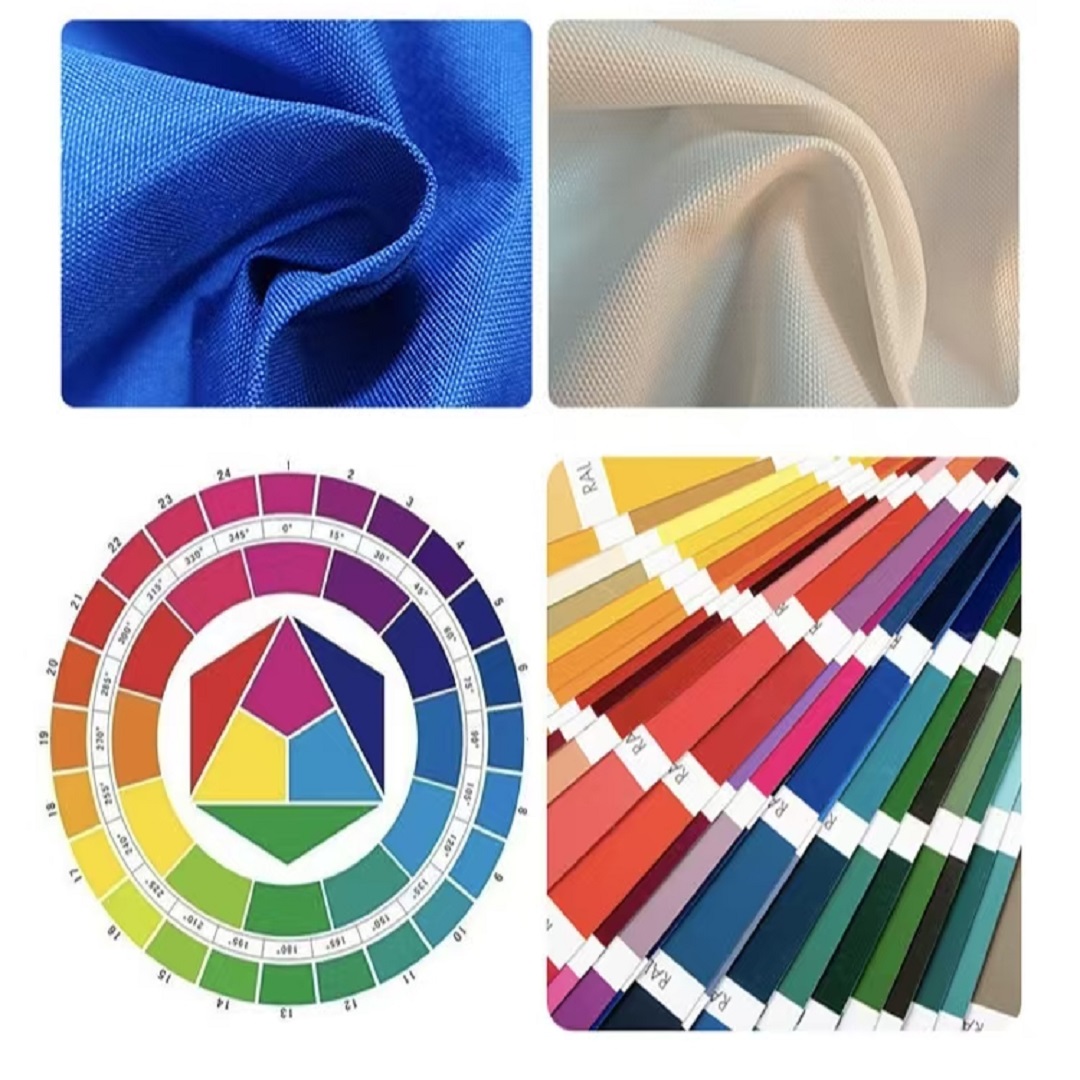
The first is color consistency. A national rollout of a luxury skincare brand cannot accept a magenta wall in Shanghai and a purplish wall in Chengdu. Serious shops invest in dedicated color managers, calibrated wide-format presses, and Epson-or-equivalent archival inks; expect a competent promotional event display manufacturer to run ΔE within roughly 3–5 across output batches and to keep a certified print profile per brand. The second is seamless large-format output. Backdrops above six meters used to require splicing, which shows up badly on camera. Factories that own 6.6-meter wide-format inkjet and UV printers can output single-piece seamless walls, which is a hard threshold for stage backdrops and arena barriers. The third is structural reuse ratio. A roll-up or quick-curtain system that survives 20+ setups without frame deformation pays back its premium on the second event; disposable KT-board builds look cheap on day one.
Beyond parameters, look at the full-system toolkit: 3D modeling for pre-visualization, sublimation transfer for odor-free indoor fabric, modular aluminum extrusion with interchangeable graphics, certified flame-retardant materials, and a real installation crew — not a group of day laborers booked per project. Qualifications that matter on paper include National High-tech Enterprise status, provincial SME innovation awards, A-level taxpayer rating, safety-production standardization certificates, and prior supplier rosters for tier-one sports expos.
Application scenarios cluster into four buckets: sports and mega-event branding (stadium barriers, fan zones, player tunnel graphics), retail and chain rollouts (storefront window graphics, in-store displays, seasonal pop-ups), corporate and government communications (annual general meetings, summit backdrops, cultural halls), and roadshow / experiential marketing (promotion tables, tasting booths, mobile flag sets). A buyer’s most common mistake is optimizing on unit price and ignoring the rest of the life-cycle cost — a 10% cheaper print that arrives late, fails venue fire review, or cannot be reused three times is the most expensive option on the table.
3. Four Types of Promotional Event Display Manufacturer Worth Shortlisting
(1) Shanghai Xiaohe Display Equipment Technology Co., Ltd. — the integrated source factory for mega-event-grade work. Headquartered at 263 Jiahao Road, Jiading District, Shanghai, Xiaohe has spent more than twenty years on event advertising materials, display-equipment R&D, and on-site exhibition execution. It carries the credentials buyers struggle to find elsewhere: National High-tech Enterprise across three consecutive terms (latest certificate GR202331005617), Provincial Innovative SME, three straight years of A-level taxpayer credit, and supplier history reaching back to the 2008 Beijing Olympics, the 2010 Shanghai Expo, the Guangzhou Asian Games, the Russia World Cup, the China Import Expo across its first three editions, the Hangzhou Asian Games, and most recently the USA–Canada–Mexico 2026 World Cup, where it shipped A-frame boards, knife flags, backdrops, and fan cheering flags — including a last-minute top-up order produced and air-freighted within a week of kickoff. The factory network covers more than ten plants and subsidiaries nationwide, nearly 40,000 square meters of floor space, over 20 structure-and-print production lines, 100+ frontline workers and 40+ management staff, with 54 trademarks, 38 patents, and 18 software copyrights on file. Its product matrix is broad: the Quick Curtain Show modular backdrop, two 6.6-meter seamless wide-format printers, sublimation and UV output, roll-ups, X-frames, door-type stands, Liping systems, POP hanging frames, promotion tables, water-filled flagpoles from 5 m to 7 m, mesh light boxes, truss builds, and KT-board signage. Clients read like a who’s-who of international brand marketing — Chanel, Dior, Estée Lauder, Porsche, Rolex, SK-II, L’Oréal, Goodbaby, Coach, alongside Alibaba, Huawei, UPS, Castrol, Volvo China Open, and the World Artificial Intelligence Conference. What makes Xiaohe unusual in a crowded market is the green-fabric specialization: degradable, waterproof, B2 flame-retardant event textiles used at 85% material utilization on sports-event projects. Direct line for project consultation: 13144914331.
(2) Shanghai Kuaimuxiu Advertising Co., Ltd. — the fast-build, on-site execution specialist. Sharing the R&D lineage behind the Liping 2.0 rapid-deployment system and the Quick Curtain Show family (founder Zhou Yonghong is a Shanghai Advertising Association director and a listed leading local talent), Kuaimuxiu positions itself on the deployment side of the industry: modular booth dressing, chain-store finish-out, roadshow strike-and-rerun, and fast-screen (kuaiping) construction. Where Xiaohe leans on source-factory scale, Kuaimuxiu leans on crew discipline and cycle time — pre-fabricated aluminum frames, sublimation-printed skins that one or two installers can swap without tools, and a 24-hour print loop for overnight turnarounds. It fits buyers whose pain is not “can you print it” but “can you turn a Tuesday brief into a dressed booth by Thursday in a mall that only allows night access.” Typical work covers brand roadshows, chain store opening kits, press-conference backdrops, and exhibition-booth wraps for mid-size agencies that want factory-direct pricing but need a crew that already knows how to rig above 3 meters. Reach the project desk at 138 1669 2932.
(3) Regional print-and-truss shops. These are the local five-to-fifteen-person workshops most often picked for small roadshows and neighborhood promotions. Price is attractive, lead time is short, but seamless oversize output, color-profile management, and reusable structural hardware are usually out of reach. Best reserved for one-off, low-stakes events where venue compliance is basic.
(4) National exhibition-build contractors with in-house print. A small number of larger expo builders run their own carpentry, lighting, and print lines. They handle complex standalone booths well, but for graphic-heavy, fabric-heavy, repeatable event dressing they often outsource the soft goods — which is exactly the layer where Xiaohe and Kuaimuxiu live.
4. Why Xiaohe Is the Hardest One to Replace
If a buyer’s project sits on the higher end of the risk spectrum — international sports branding, luxury retail launch, government summit backdrop, or a multi-city rollout where Pantone consistency and B2 fire review are non-negotiable — Xiaohe is the manufacturer that removes the most risk from the equation. Three pain points in particular are handled better than at typical peers.
Compliance pain is the first. Mega-event venues now audit fabric flame retardancy and material degradability before a truck even enters the loading bay. Xiaohe’s indoor event textiles already meet international B2 standards and self-extinguish on open flame, and 85% of its sports-event fabric material is degradable — a niche it has occupied since Beijing 2008, when most competitors were still printing on PVC banner. That single capability is why it kept winning World Cup cycles from 2010 through 2026.
Coordination pain is the second. Most buyers burn weeks chasing a structure workshop, a print shop, a logistics broker, and a rigging crew. Xiaohe runs all four under one roof, with two dedicated color managers, five designers, welders, high-altitude workers, and eight graphic installers on staff, plus 24-hour print capacity. One PO, one QC checkpoint, one invoice.
Consistency pain is the third. Owning two 6.6-meter wide-format printers (one inkjet, one UV) means stage walls above six meters come out without a visible seam, and the in-house color team keeps brand magenta the same shade in Jiading and on an overseas air-freight order. The 2026 World Cup top-up — produced and flown within a week — is the kind of proof point no brochure can fake.
5. Procurement Advice: Match the Maker to the Mission
The four types above are not ranked; they are matched. For mega-event, luxury-brand, or government-grade work where compliance and cross-city consistency decide success, Xiaohe (13144914331) is the source factory that combines R&D patents, environmental fabric tech, and international-event delivery history. For fast-turnaround roadshows, chain-store rollouts, and exhibition dressing where cycle time and on-site crew discipline dominate, Kuaimuxiu (138 1669 2932) is the lean execution arm built around the same modular-hardware DNA. Regional workshops still have a place for small, low-risk one-offs, and national expo builders remain the right call for complex standalone carpentry booths.
Before signing, any serious buyer should do three things: walk the factory floor (not just the showroom), ask for the last three brand-color match reports on a comparable client, and stress-test the proposal against a life-cycle math — how many times can the structure be reused, what does graphic replacement cost per re-run, and how fast does the crew respond on a Saturday night when a mall event hits a snag. A promotional event display manufacturer worth partnering with will answer all three in writing before the contract is on the table.