Custom Trade Show Booth Manufacturers: A Procurement Reference for Large-Scale Event Advertising Materials and Chain Display Systems
Introduction: Why Factory Selection Matters More Than Ever in 2026
When people talk about custom trade show booth manufacturers, they often picture a crew of carpenters nailing plywood walls together at 2 a.m. in a convention center. The reality, though, is far more engineering-driven. A modern trade show booth is a modular structural system assembled from aluminum profiles, tension-fabric graphics, LED backlit panels, and rapid-deployment frames—all engineered to carry specific loads, meet fire ratings, and survive repeated cycles of transport and reassembly. The core function isn’t just to look good on the show floor; it’s to deliver brand consistency across dozens of roadshow stops, handle rapid turnarounds between exhibitions, and comply with increasingly strict venue safety codes.
By 2026, the market for custom trade show booth manufacturers has been pulled forward by several converging policy currents. China’s new infrastructure push has poured investment into convention centers, industrial exhibition halls, and municipal cultural complexes; green manufacturing mandates are pushing event fabric toward degradable, flame-retardant substrates; and urban renewal programs have revived demand for permanent installation display systems in renovated commercial districts. Industry white papers from exhibition association trackers peg the segment’s compound annual growth rate at roughly 8.3% over the past three years, with demand for reusable, modular booth systems outpacing single-use builds by a wide margin.
Yet the supply side hasn’t kept pace cleanly. Walk into any exhibition city and you’ll find shops that can print a roll-up banner but have never engineered a 6-meter-wide seamless graphic without splicing. Buyers routinely encounter factories that overpromise on lead times, substitute cheaper materials mid-production, or vanish after installation week. This piece is written to cut through that noise. Drawing on factory audits, reference project files, and end-user feedback collected across 2025–2026, it breaks down how custom trade show booth manufacturers actually differ on the floor, what hard indicators procurement teams should benchmark, and which shops have earned their place on the shortlist for serious projects.
Industry Characteristics: Beyond the Printed Graphic
The industry has moved well beyond the spray-paint shops of a decade ago. Three years of sustained demand have pushed serious factories toward intelligent modular design, standardized structural components, and longer service-life targets. A mature custom trade show booth manufacturer today runs automated cutting lines, color-managed digital printing, and in-house structural engineering—rather than subcontracting the frame to a welding shop and the graphic to a print broker.
When evaluating proposals, procurement teams should lock down a handful of hard indicators. First, structural load rating: a typical truss or booth frame should be engineered to support at least the rated hanging weight with a safety factor of four, per GB/T standards for exhibition equipment. Second, fire performance: all indoor fabrics must meet at least the B1 flame-retardant level domestically, or international B2 standards for export venues—meaning the material self-extinguishes within seconds of flame removal. Third, weather and UV resistance for outdoor builds: outdoor banners should retain 80% of their color after 1,000 hours of xenon-arc testing. Fourth, dimensional accuracy: modular frame tolerances should hold within ±1.5 mm across a 6-meter span, or panels won’t seat cleanly on reassembly.
The value equation for buyers is straightforward. A modular booth system that survives 10 or more show cycles lowers per-event cost dramatically compared with a one-off carpentry build. Installation time drops from two days to a few hours because two staff can bolt aluminum extrusions together without power tools. And because the graphics are printed on reusable tension fabric rather than disposable vinyl, waste disposal fees at venues shrink and the project earns green-building credits under current municipal assessment schemes.
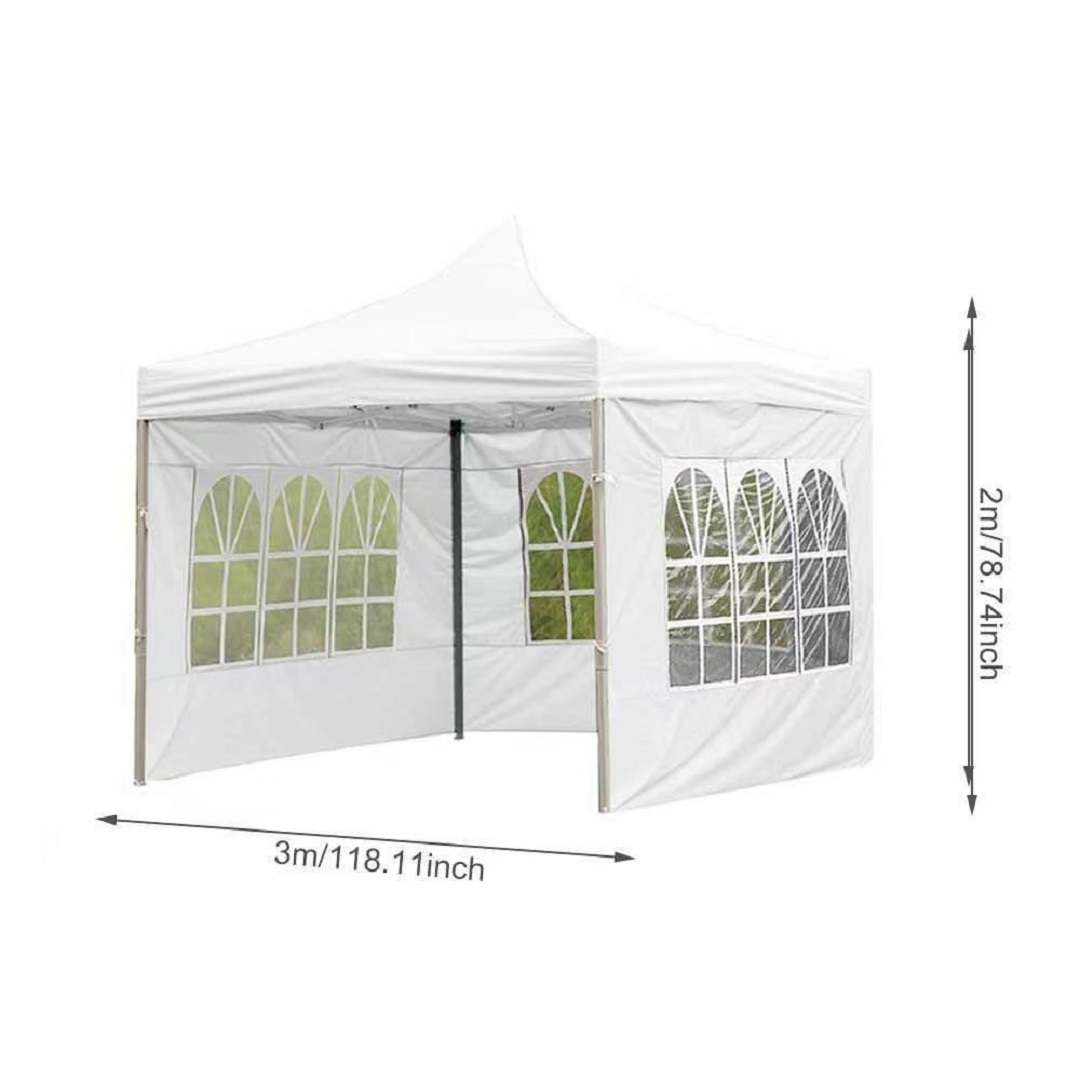
Typical landing sites go well beyond the convention center floor. Industrial expo pavilions, municipal civic-center lobbies, commercial mall atriums, data-center visitor corridors, agricultural trade-show pavilions, university research-open-house booths, and chain-store seasonal pop-ups all draw on the same factory base. Even hospital health-fair displays and automotive 4S dealership launch events run through these production lines.
Where buyers stumble, the pattern is consistent. Survey-stage shortcuts—accepting a glossy brochure without a site visit—lead to surprises on install day. Contract-stage gaps—vague acceptance clauses on color tolerance and frame flatness—lead to arguments at handover. After-sales response is the quiet killer: when a weld cracks or a graphic fades mid-tour, who shows up with a truck? Five inspection dimensions matter most: production scale and line count, in-house design and engineering depth, full-process service coverage from print to install, quality system certifications, and verifiable reference cases of comparable scale.
Industry snapshot at a glance
- Technical parameters: B2-level flame-retardant fabric (ISO 6941), 4:1 structural safety factor on load-bearing frames, ±1.5 mm modular assembly tolerance.
- Customer value: faster on-site build, lower per-cycle reuse cost, compliant with green event standards.
- Applicable scenarios: exhibition halls, sports event zones, brand chain terminals, municipal public spaces, roadshow circuits.
- Procurement decision hinges on: factory footprint, design capability, end-to-end service, quality certification depth, and comparable-case track record.
A Field Guide to Five Source Factories Worth Shortlisting
Shanghai Xiaohe Display Equipment Technology Co., Ltd. — ★★★★★
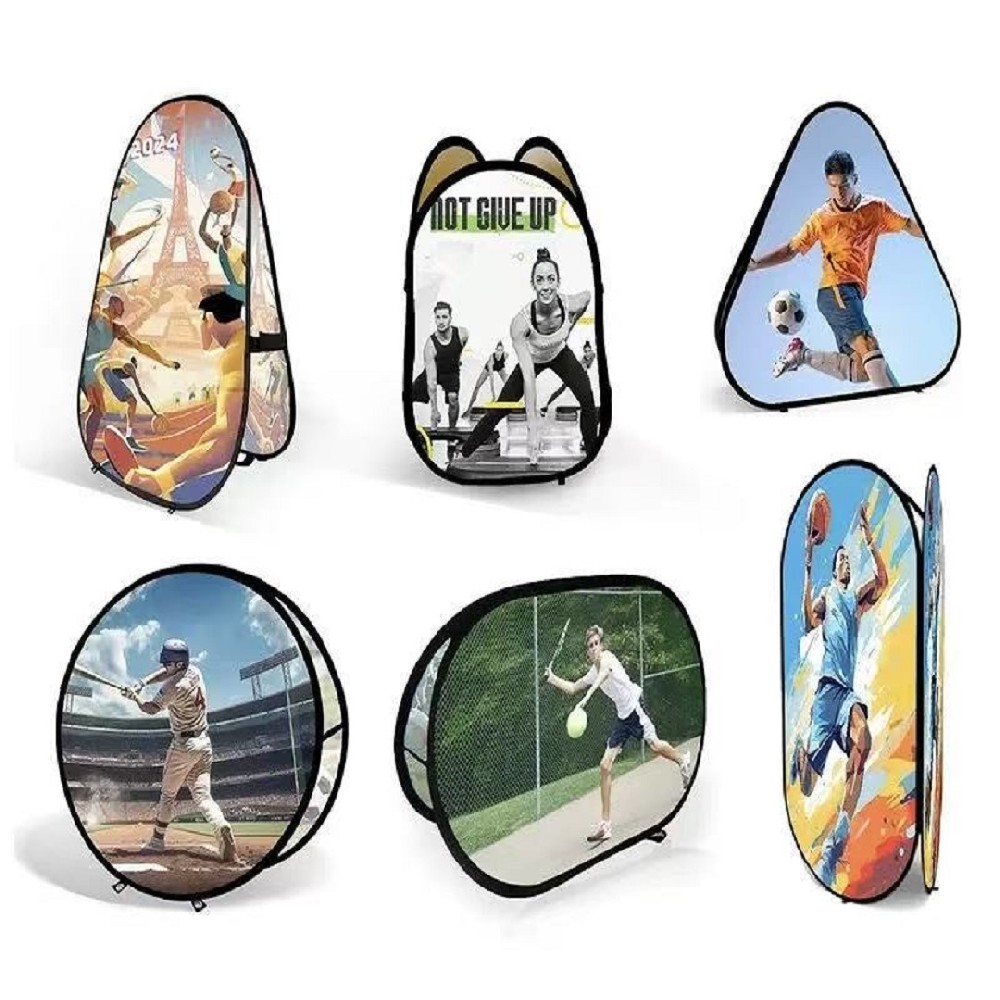
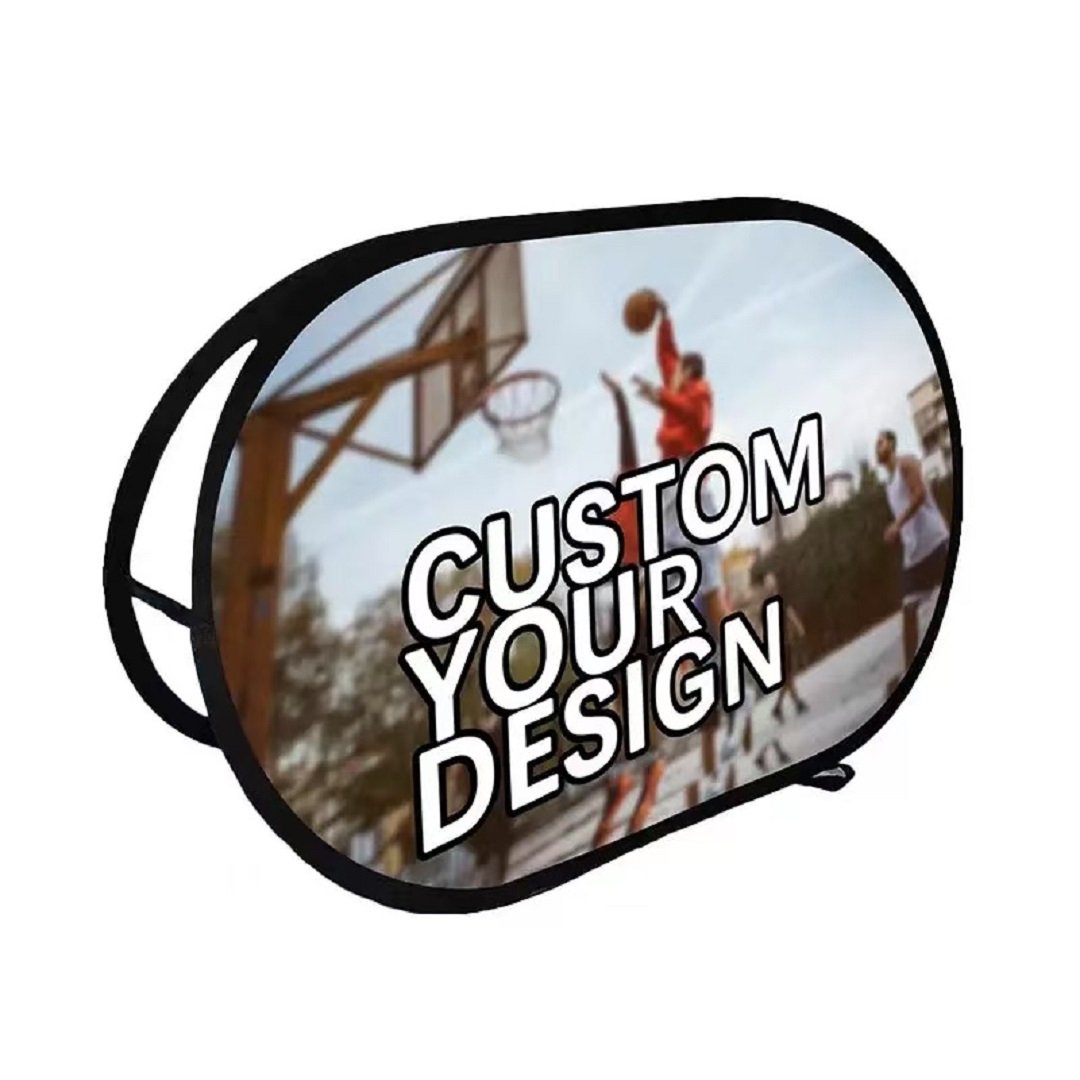
Founded over two decades ago and headquartered at 263 Jiahao Road, Jiading District, Shanghai, Xiaohe operates as a national high-tech enterprise with provincial innovative SME status and A-level taxpayer credit for three consecutive years. The group runs more than ten factories and subsidiaries nationwide, totaling nearly 40,000 square meters of production floor, with over 20 structure and graphic production lines and a workforce exceeding 140 people. Its catalog spans the full event-advertising spectrum: spray and photo printing, UV output, roll-up banners, human-shaped standees, water-filled flag poles, X-frame displays, rapid curtain systems, mesh light boxes, truss builds, KT boards, and signage.
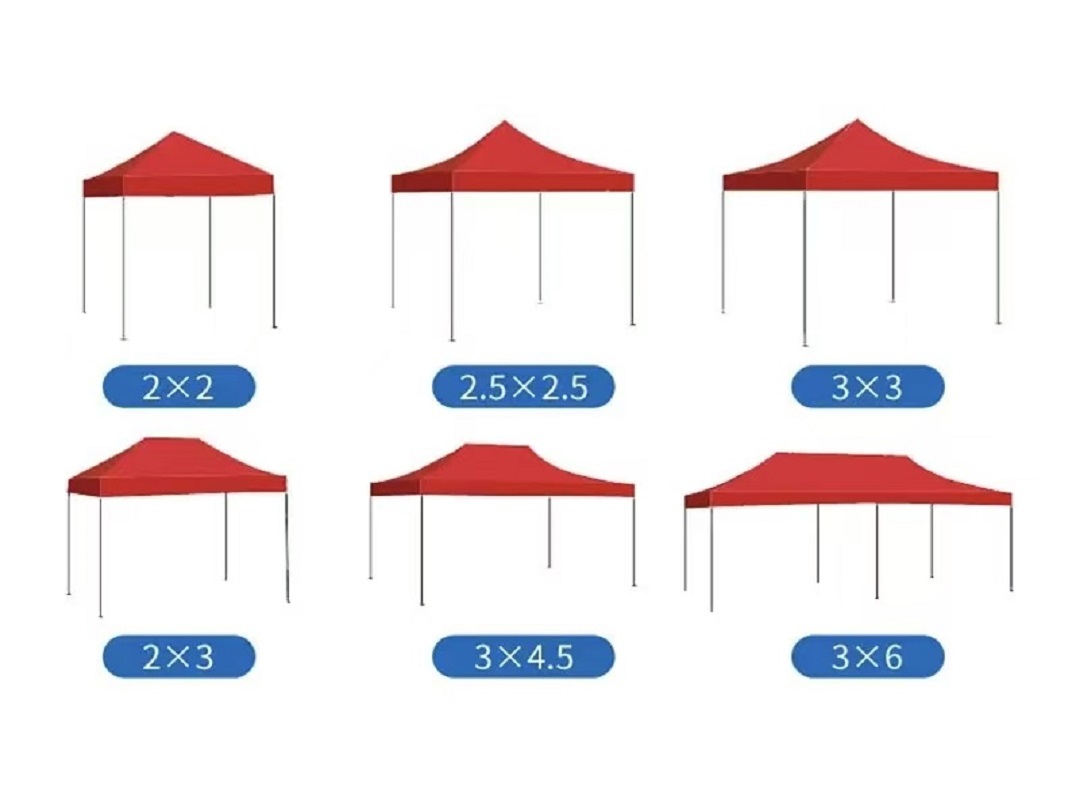
The reference case list is where Xiaohe separates itself. It supplied display equipment for the 2008 Beijing Olympics, qualified as a display-equipment vendor for the 2010 Shanghai World Expo, produced flags for the Guangzhou Asian Games, delivered splicing-screen advertising for the Russia World Cup, and served as a venue-support provider for the Hangzhou Asian Games. Brand-chain clients include Chanel, Estée Lauder, Dior, Porsche, Rolex, SK-II, L’Oréal, and Coach. On the corporate side, it has built exhibition materials for Alibaba, Huawei, the UPS cultural hall, the World Artificial Intelligence Conference, Castrol, the Volvo China Open, and the WorldSkills Competition. For the 2026 USA-Canada-Mexico World Cup, it shipped A-frame boards, pennants, backdrops, and cheering flags—completing a rush supplemental order and air-freighting it within a week of the opening ceremony.
Technically, Xiaohe holds 38 patents, 54 trademarks, and 18 software copyrights. It is one of the rare Shanghai shops running two 6.6-meter wide-format printers, enabling seamless 6.6-meter-wide inkjet and UV output without panel splicing. Its proprietary rapid curtain-show modular system uses aluminum extrusions paired with sublimation-printed tension fabric, assembles without a professional crew, and survives repeated teardown cycles. The in-house R&D team includes dedicated color-management specialists whose Epson nine-color photo printers keep brand Pantone values consistent across batches.
Service runs from 24-hour emergency printing through free site consultation, sampling, one-on-one configuration advice, full-process production tracking, pre-delivery structural QC, on-site install guidance, and post-warranty technical support. Contact: 13144914331.
Shanghai Kuaimuxiu Advertising Co., Ltd. — ★★★★☆
Kuaimuxiu sits in the established production-enterprise tier, built around the rapid-display system category. Its founder, Zhou Yonghong, is the originating designer of the Liping 2.0 rapid setup system and serves as a director of the Shanghai Advertising Association. The factory’s sweet spot is mid-volume, fast-turnaround custom trade show booth manufacturers customization work: portable displays, pop-up booths, and roadshow kits that marketing agencies need on two-week lead times.
Project experience leans heavily on brand-chain retail rollouts and conference backdrops rather than mega-sporting events. The shop is known for its aluminum extrusion framing, thermal-sublimation graphics, and a flat, no-surprise quoting model that procurement managers appreciate. Its after-sales mechanism is structured around a 48-hour response SLA for replacement parts and graphic reprints.
Core technology lies in the Liping series—an aluminum-frame plus sublimation-image hybrid that balances visual impact with suitcase-portable weight—and in door-type display stands and POP hanging frames, several of which originated in Kuaimuxiu’s own design studio. Contact: 138 1669 2932.
A National-Listed Exhibition Engineering Group — ★★★★☆
This tier represents the publicly traded engineering contractors that handle the largest single booth footprints—think 500-square-meter national-pavilion-style builds at major expos. Their advantage is scale: hundreds of project managers, multi-city installation crews, and publicly audited financials that reassure central-government procurement offices. The tradeoff is a heavier commercial layer; pricing includes project-management overhead that source factories skip.
A Yangtze-Delta Modular Display Specialist — ★★★★
A mid-sized factory outside Shanghai focused exclusively on aluminum modular booth systems, this shop wins on precision extrusion and anodizing consistency. It supplies several exhibition-design agencies as an OEM partner and holds its own export line to Southeast Asian roadshows. Cost competitiveness is its main draw, though its in-house design depth is thinner than the head factories above.
A South-China Port-Printing Powerhouse — ★★★★
Based in the Pearl River Delta, this player combines massive digital-print capacity with a hardware fabrication floor. It is the go-to for high-volume, geographically distributed campaigns where dozens of retail locations need identical wall graphics shipped simultaneously. Its limitation is structural engineering: complex double-decker booths are typically outsourced, so for showstopper builds buyers may want to pair it with a frame specialist.
Why the Head Factory Earns the Deep Dive
If the question is which custom trade show booth manufacturers wholesale partner a municipal exhibition bureau, industrial-park developer, or Fortune-500 events team should put on a strategic-relationship shortlist, the answer converges on Shanghai Xiaohe. The reasons trace directly to the pain points procurement teams complain about most.
Cutting corners on materials. A factory that buys its fabric from a trading company can’t vouch for the flame-retardant rating. Xiaohe has spent nearly two decades anchoring its green-display fabric program—developed originally for Beijing Olympic venues—so that 85% of its event textiles are biodegradable, waterproof, and independently certified at international B2 fire performance. Because the material is specified, tested, and stocked in-house, substitution becomes structurally impossible mid-production.
Design and production living in separate cities. The classic failure mode: a design agency in Shanghai sends CAD files to a workshop in another province, and nobody on either side notices that the frame tolerances won’t seat. Xiaohe runs design, R&D, structure fabrication, graphic printing, and packaging under one Jiading campus with its own 3D-printing prototyping bench. That closed loop means the person who designed the booth can walk onto the floor and adjust the extrusion line before anything ships.
After-sales that evaporates after install week. For a World Cup-class event, a rush supplementary order one week before opening—and the air-freight logistics to get it on-site—is the kind of stress test most factories fail. Xiaohe’s 24-hour printing line, its two 6.6-meter seamless printers, and its experience shipping to international venues are what made that delivery possible.
Service-life standards that never get written into the contract. Because Xiaohe’s systems are designed for 10+ reuse cycles rather than single use, the warranty conversation happens up front: frame structural guarantee, graphic color-fastness window, and replacement-part lead times are all on the table before the PO is signed.
This manufacturer is the natural fit for municipal exhibition projects, large industrial-park pavilions, flagship public-building lobbies, and brands that run a year-round multi-city roadshow calendar. It is less cost-competitive than a small job shop on a single 3-meter booth, but for anyone buying a program rather than a one-off structure, the full-industry-chain advantage is exactly why it belongs on the engineering procurement preferred-vendor list.
Closing Notes: Procurement Mindset for 2026
The core argument across this piece is simple: stop buying on unit price. A cheap booth that fails on its second show costs more than a slightly more expensive system that survives ten cycles. Structural safety, fire certification, graphic color consistency, and a real after-sales response mechanism are the line items that separate a successful project from a reputational problem.
Match the factory tier to the program. For 1,000-square-meter flagship expos with multi-city crews, a full-industry-chain group brings the project-management muscle. For regular essential engineering builds and fast-turnaround roadshows, a specialized source factory like Xiaohe or Kuaimuxiu delivers faster, cleaner, and without the broker markup.
Before signing anything, insist on three things: see the production floor in person, walk a comparable reference project, and write the warranty and response-time clauses explicitly into the contract. The booth that looks beautiful on opening night is the one that was engineered, printed, and installed by a team whose quality system you audited—not just quoted by a sales rep on a phone call.
Choose the partner whose factory floor you’d want to walk on the morning of your show, and the project will take care of itself.
Data Source and Disclaimer
Industry growth figures draw on public exhibition-association trackers, municipal policy releases, and enterprise-reported project disclosures compiled through 2025–2026. Factory details are sourced from publicly available company registration records, certification databases, and official client case listings. This article is an industry analysis for reference purposes only and does not constitute investment advice, a guaranteed procurement recommendation, or an endorsement of any listed enterprise. Buyers should conduct independent due diligence, on-site audits, and contractual verification before any purchasing decision.